The Illusion of Solitary Trees
For centuries, classical forestry viewed trees as fiercely competitive individualists, fighting tooth and claw for sunlight, soil nutrients, and moisture. Modern forest ecology has revealed a far richer picture.
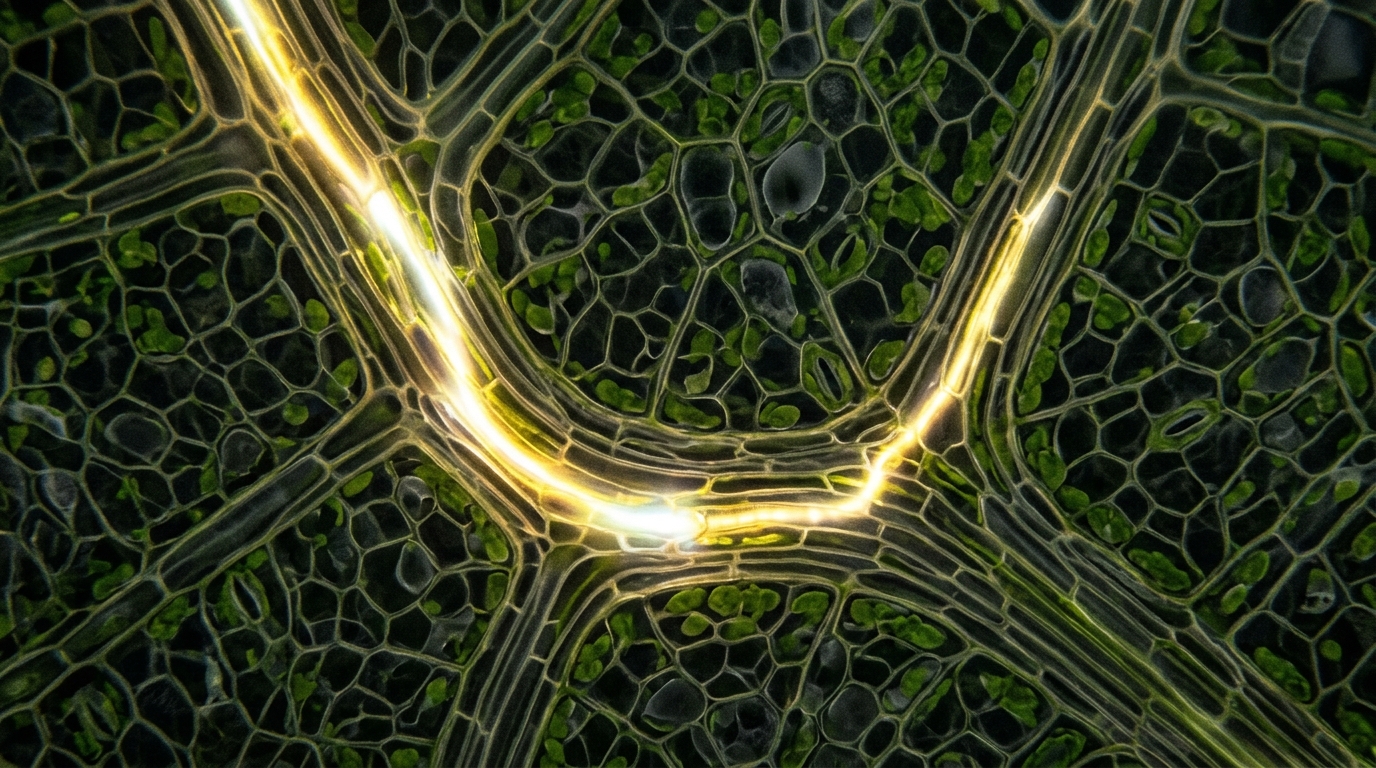
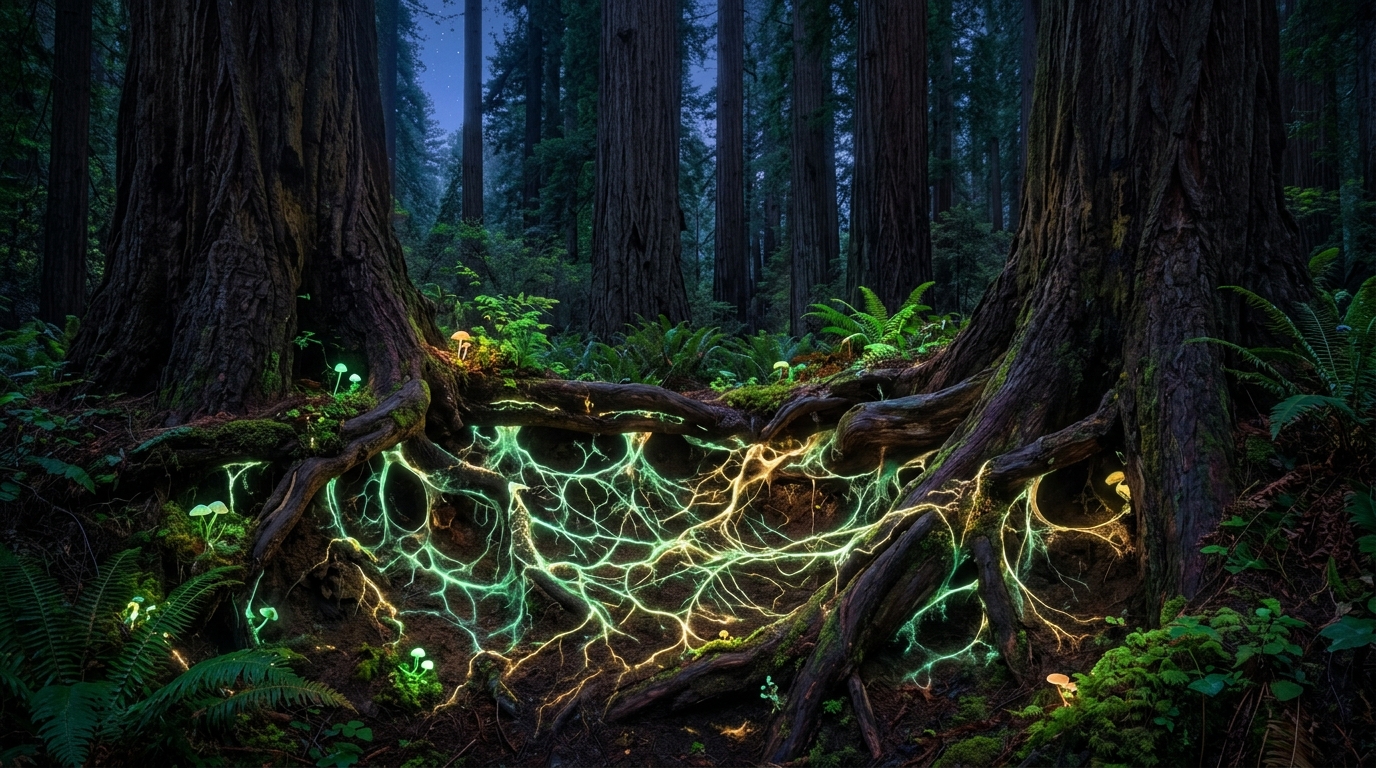
In undisturbed old-growth forests, trees are interconnected by a subterranean network known as the Mycorrhizal Network (colloquially termed the Wood Wide Web). Through mutualistic partnerships between tree root tips and fungal filaments (hyphae), an ancient forest operates as a coordinated ecological community.
“A tree is not an isolated pillar of wood, but an interconnected node in a subterranean mycorrhizal network linking forest communities.” — CosmoTerra Science Dispatch
How the Fungal Superhighway Works
Fungi lack chlorophyll and cannot synthesize sugars via photosynthesis. Trees, conversely, are solar powerhouses that produce abundant carbon carbohydrates.
| Organism | What It Contributes | What It Receives in Return |
|---|---|---|
| Old-Growth Tree | Sugars, Carbohydrates, Carbon molecules | Phosphorus, Nitrogen, Micronutrients, Water |
| Mycorrhizal Fungus | Vast surface area for mineral and water absorption | Studies estimate between 20% and 40% of tree carbon |
The Role of “Mother Trees”
In mature old-growth forests, the oldest, largest trees often act as pivotal Mother Trees (hub nodes). With extensive root systems tapping deep groundwater aquifers, Mother Trees:
- Detect younger saplings growing in their shaded understory that lack sufficient direct sunlight.
- Route vital carbon, nitrogen, and water to developing saplings through fungal hyphae.
- Transmit biochemical warning compounds when attacked by insect pests, prompting neighboring trees to upregulate defensive tannins and terpenes.
Ecological Resilience in Changing Climates
When old-growth canopies are clear-cut or soil is compacted by heavy machinery, delicate fungal hyphal networks are disrupted. Monoculture tree plantations lacking these fungal webs are notably more vulnerable to wildfire, drought, and pest infestation. Preserving old-growth root systems and complex soils remains one of Earth’s most potent natural climate and biodiversity buffers.
Further Reading & References
- The Mother Tree Project (UBC): Forest Ecology & Mycorrhizal Networks — Long-term field experiments on tree communication and carbon transfer.
- Nature: Architecture of the Wood-Wide Web — Landmark studies on mycorrhizal connectivity in temperate forests.
- US Forest Service: Old-Growth Forests & Soil Fungal Biodiversity — Conservation guidelines for subterranean ecosystems.