
The Silent Scream of the Forest
It is a common question, often raised in debates about ethics and diet: If animals feel pain, do plants feel it too when they are harvested or damaged?
When a caterpillar bites into a leaf, or when you prune a rose bush, the plant doesn’t wince, cry out, or run away. To the human eye, it remains entirely passive. However, modern scientific research using highly sensitive imaging and acoustic equipment has revealed that beneath this quiet exterior, plants are reacting to injury with extraordinary speed and complexity. They communicate, mount defenses, and even warn their neighbors.
But does this sophisticated response mechanism equate to “feeling pain”? To answer this, we must dive into the fascinating field of plant signaling and define what pain actually is from a biological perspective.
“Plants may not have brains, but they are not merely passive green background objects. They are highly complex organisms capable of perceiving and reacting to their environment in real-time.” — CosmoTerra Science Dispatch
How Plants React to Damage
While plants lack a central nervous system, a brain, and pain receptors (nociceptors), they possess an intricate internal communication network. When a plant experiences physical damage, it triggers a cascade of chemical and electrical signals that travel rapidly throughout its body.
The Role of Glutamate and Calcium Waves
In 2018, researchers at the University of Wisconsin-Madison published a groundbreaking study detailing how plants sense and react to damage. By genetically altering mustard plants (Arabidopsis thaliana) to produce a fluorescent protein that glows in the presence of calcium, they observed something remarkable.
When a caterpillar bit the leaf, the damaged cells released glutamate—an amino acid that surprisingly also acts as a crucial neurotransmitter in the mammalian central nervous system. In plants, the glutamate binds to receptors on neighboring cells, triggering a wave of calcium ions that ripples across the entire plant at a speed of about 1 millimeter per second. While this is much slower than mammalian nerve impulses (which can travel at up to 120 meters per second), for a plant, it is lightning fast.
This calcium wave acts as an internal alarm system, alerting distant leaves to start producing defensive chemicals, such as foul-tasting compounds or toxins, to deter the attacker.
The Chemical “Scream”: Volatile Organic Compounds
Plants don’t just communicate internally; they also broadcast their distress to the outside world. When damaged by herbivores, plants release specific airborne chemicals known as Volatile Organic Compounds (VOCs).
The scent of freshly cut grass, for example, is actually a mixture of VOCs (specifically, green leaf volatiles) released by the grass blades in response to the trauma of a lawnmower. These chemical signals serve multiple purposes:
- Warning Neighbors: Nearby plants can “smell” these VOCs and preemptively ramp up their own chemical defenses before the attacker reaches them.
- Calling for Backup: Some plants release specific VOCs that attract predatory insects. For instance, if a plant is attacked by spider mites, it may release chemicals that specifically attract the predatory mites that feed on the herbivores, effectively calling in a microscopic air strike.
Ultrasonic Popping Sounds
Recent studies have even shown that plants emit high-frequency acoustic sounds when subjected to stress. Researchers in Israel placed microphones near tomato and tobacco plants and discovered that when the plants were deprived of water or had their stems cut, they emitted ultrasonic “clicks” or “pops” in the 20 to 100 kilohertz range—too high pitched for human ears, but potentially audible to insects or bats up to 5 meters away. These sounds are thought to be caused by cavitation, the popping of tiny air bubbles inside the plant’s water-transporting xylem tissue.
The Difference Between “Reaction” and “Pain”
Given all these incredible responses—electrical waves, chemical SOS signals, and ultrasonic pops—it is tempting to anthropomorphize and conclude that plants feel pain. However, most biologists and botanists argue against this interpretation.
To understand why, we must differentiate between nociception and pain.
- Nociception is the biological mechanism of detecting harmful stimuli and responding to it. A plant sending a calcium wave after a caterpillar bite is nociception. Even simple organisms like bacteria exhibit nociception by moving away from toxic chemicals.
- Pain, on the other hand, is a subjective, conscious experience. According to the International Association for the Study of Pain, pain is an “unpleasant sensory and emotional experience.” It requires a complex brain and a nervous system to process the physical sensation into an emotional state of suffering.
Because plants lack a brain, neurons, and consciousness, they do not have the biological hardware necessary to experience the emotional suffering associated with pain. Their responses are highly evolved, automatic physiological reactions designed to maximize survival, but they occur without conscious awareness.
Redefining Intelligence
The fact that plants don’t feel pain shouldn’t diminish our respect for them. If anything, it highlights a different, entirely alien form of “intelligence.”
Plants have evolved to survive in a world where they cannot run away from danger. Instead of fighting or fleeing, they have mastered chemistry. They monitor their environment, optimize root growth based on nutrient gradients, track the sun, manipulate insects for pollination and defense, and share resources through underground fungal networks.
They are living, breathing testaments to the complexity of life on Earth. While a carrot doesn’t suffer when you chop it, it is a product of millions of years of evolutionary brilliance—a quiet, chemical genius that sustains the entire planet.
The Wood-Wide Web: Mycorrhizal Networks
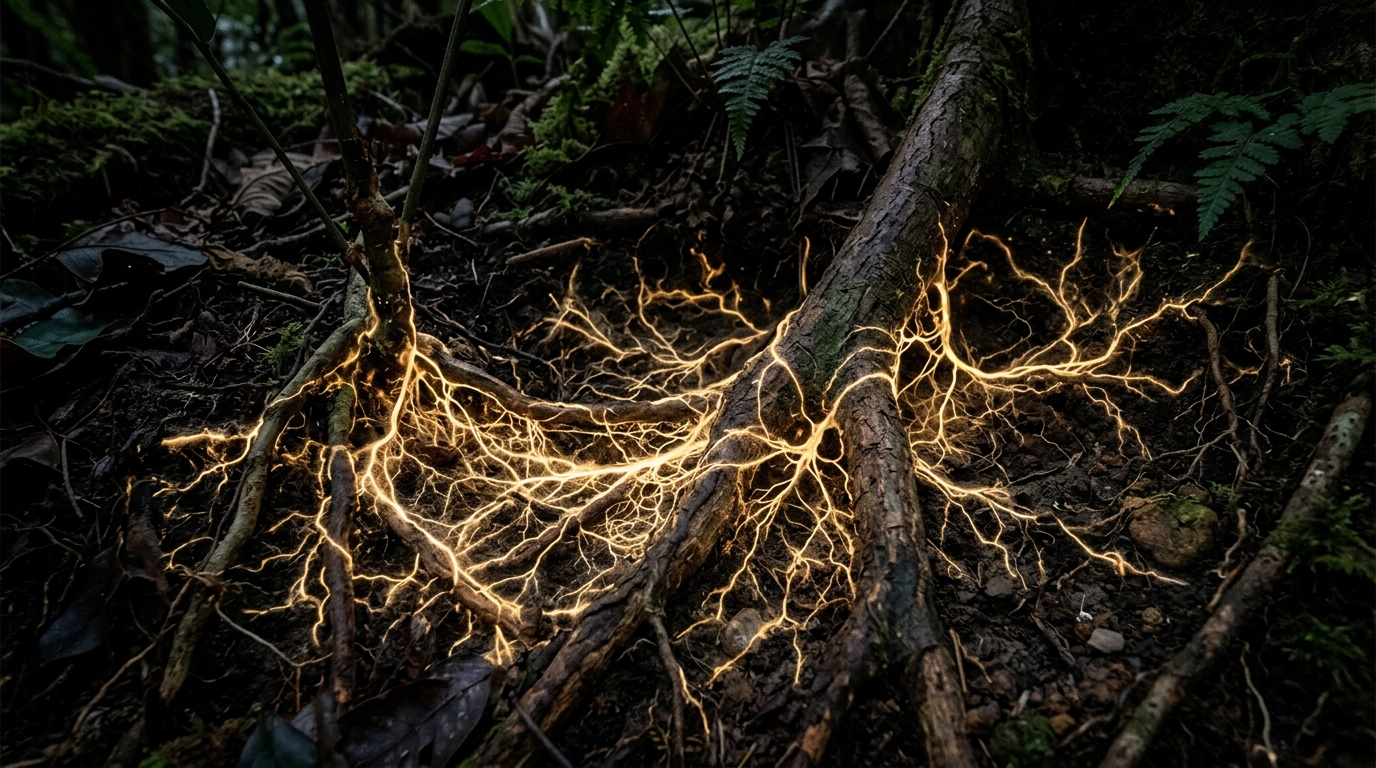
Beyond their internal chemical and electrical signaling, plants also tap into a vast underground communication system known as the mycorrhizal network, often dubbed the “wood-wide web.” This symbiotic relationship involves fungi wrapping around or penetrating the roots of most plant species. The fungi provide the plants with essential nutrients like phosphorus and nitrogen, absorbed from the soil, while the plants supply the fungi with carbohydrates produced through photosynthesis.
Crucially, these fungal threads connect the roots of different plants—even across different species—allowing them to share resources and transmit chemical warning signals. If a tree is attacked by aphids, it can send stress signals through the fungal network, prompting neighboring trees to upregulate their own defensive chemicals before the aphids even reach them. This hidden, interconnected web further blurs the line of where one plant ends and the broader forest organism begins.
Further Reading & References
- Science Magazine: Plants communicate with each other using glutamate
- Cell: Sounds emitted by plants under stress are airborne and informative
- Scientific American: Do Plants Think?