The First Photons of the Universe
When we look up into the night sky, we are looking backward in time. The light traveling from distant celestial objects has been racing across expanding spacetime for millions—and in some cases, billions—of years.
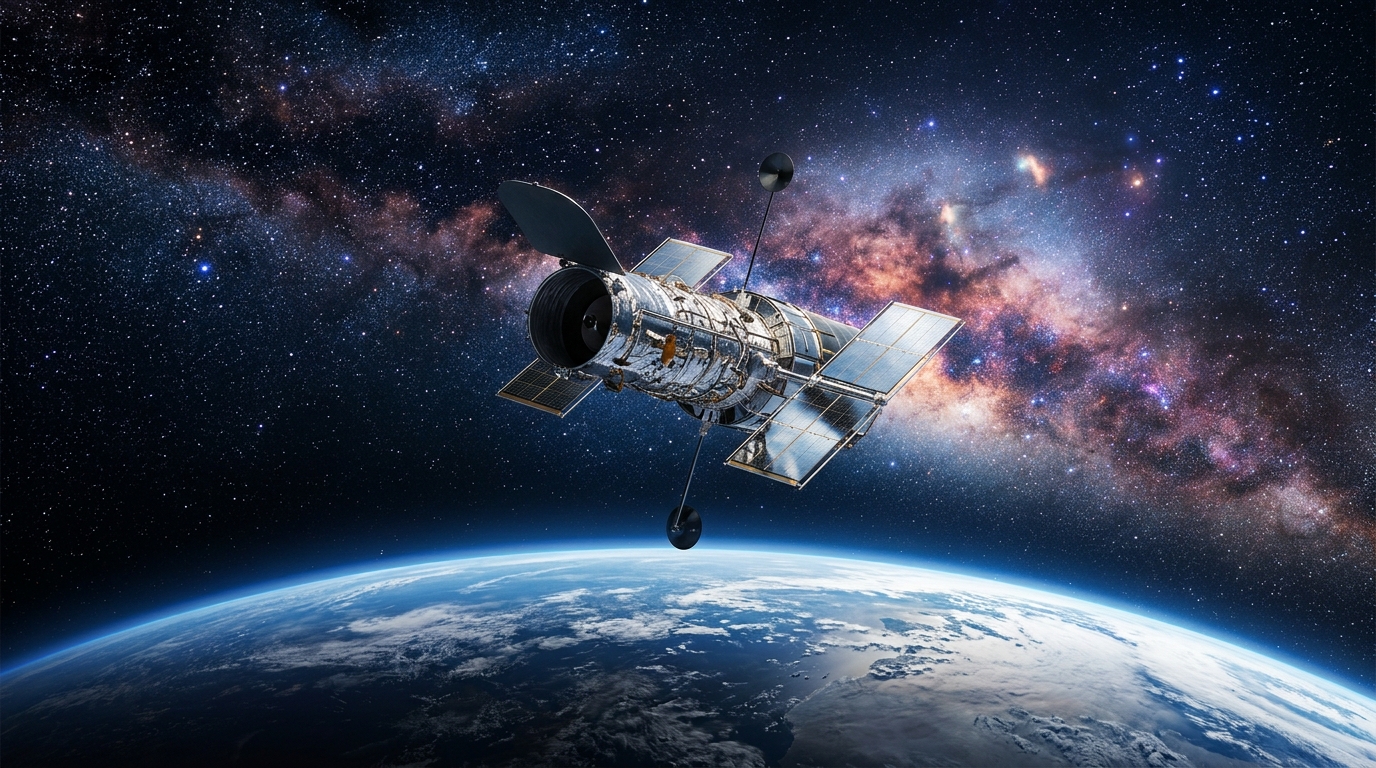
With the deployment of the James Webb Space Telescope (JWST) at the Second Sun-Earth Lagrange Point ($L_2$), humanity gained an unprecedented optical time machine. Unlike Hubble, which primarily observed visible and ultraviolet light, JWST observes in the near-infrared and mid-infrared spectrum ($0.6 \text{ to } 28 \ \mu\text{m}$).
“We are not merely cataloging stars; we are reading the earliest chapters of cosmic evolution recorded in faint infrared photons.” — CosmoTerra Science Dispatch
Gravitational Lensing: Nature’s Cosmic Megascope
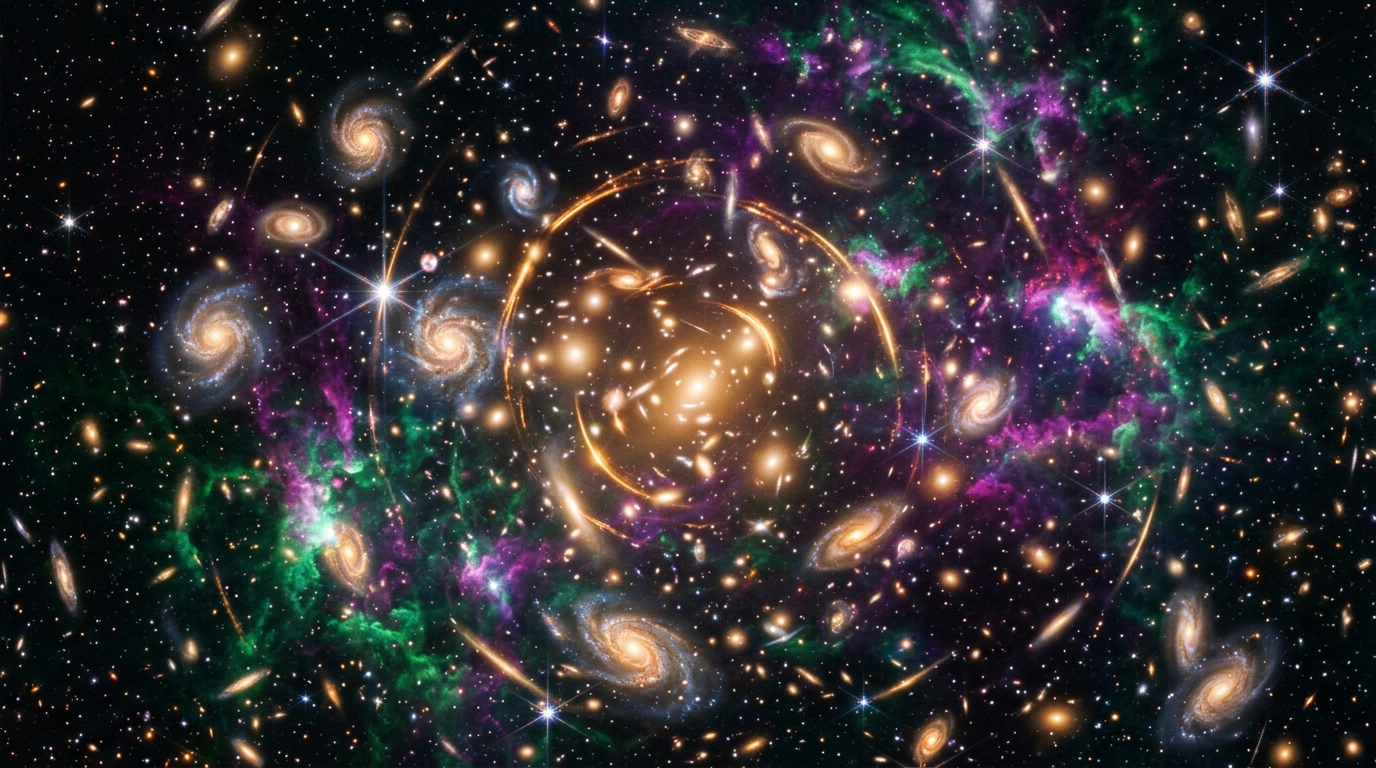
One of the most awe-inspiring phenomena visible in JWST’s Deep Field images is Einstein’s Gravitational Lensing. Massive clusters of thousands of galaxies warp the very geometry of spacetime around them, acting as natural magnifying glasses that bend and amplify the light of ultra-distant background galaxies into radiant golden arcs and rings.
Distant Galaxy (13.2B ly) ───► [ Massive Galaxy Cluster ] ───► JWST Detector
                               (Bends & Warps Spacetime)      (Magnified 20x-100x)
Key Breakthrough Discoveries
- Early Galaxy Maturity: JWST has revealed surprisingly luminous and structured galaxies existing within 300 to 400 million years after the Big Bang (such as JADES-GS-z14-0), prompting astrophysicists to refine models of early star formation and gas accumulation.
- Atmospheric Fingerprints of Exoplanets: By measuring transmission spectra during planetary transits, JWST detected carbon dioxide, sulfur dioxide, water vapor, and methane in atmospheres of exoplanets orbiting distant stars like WASP-39b and the TRAPPIST-1 system.
- Early Supermassive Black Hole Seeds: Telescopic data indicate massive black holes existed earlier in cosmic history than standard models predicted, suggesting novel mechanisms for direct collapse or rapid primordial accretion.
The Chemistry of Cosmic Stardust
Every element heavier than helium in the universe—including the iron coursing through our blood and the calcium in ancient marine structures—was synthesized in the nuclear furnaces of dying stars and supernova detonations. In observing the primordial universe, we are tracing the lineage of matter itself from quantum fluctuations to conscious observers.
Further Reading & References
- NASA / ESA / CSA: Webb Space Telescope Official Science Releases — High-resolution imagery, spectroscopic datasets, and mission updates.
- Space Telescope Science Institute (STScI): JWST Science Operations Archive — Primary observational programs and instrument calibration papers.
- Nature Astronomy & The Astrophysical Journal: JADES Deep Field Observations — Spectroscopic confirmation of ultra-high redshift galaxy candidates.